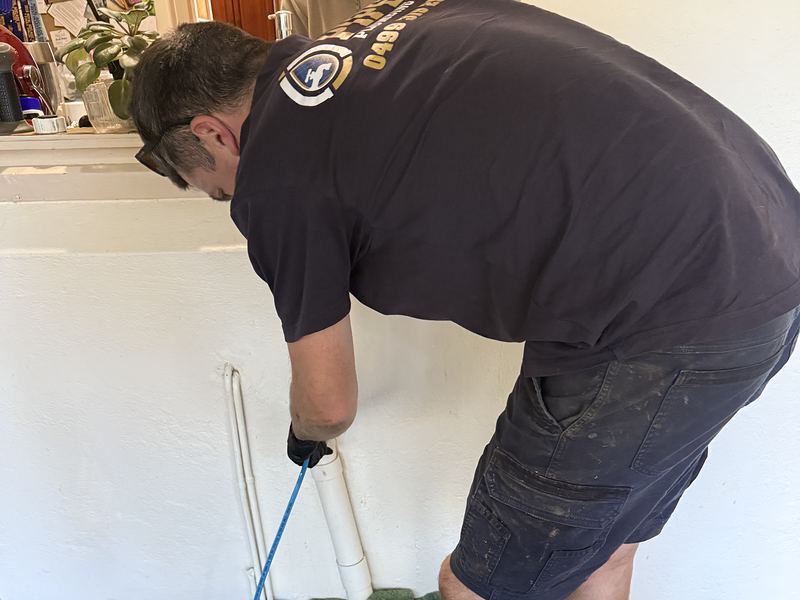
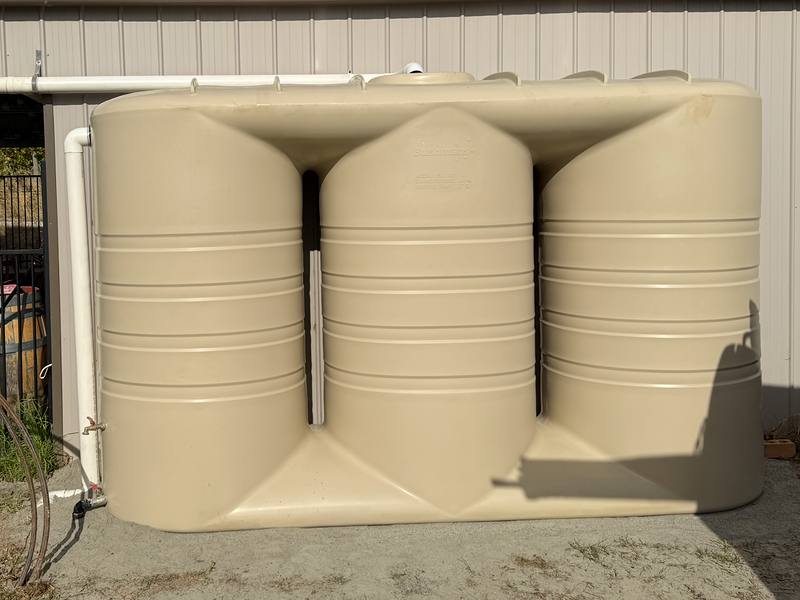
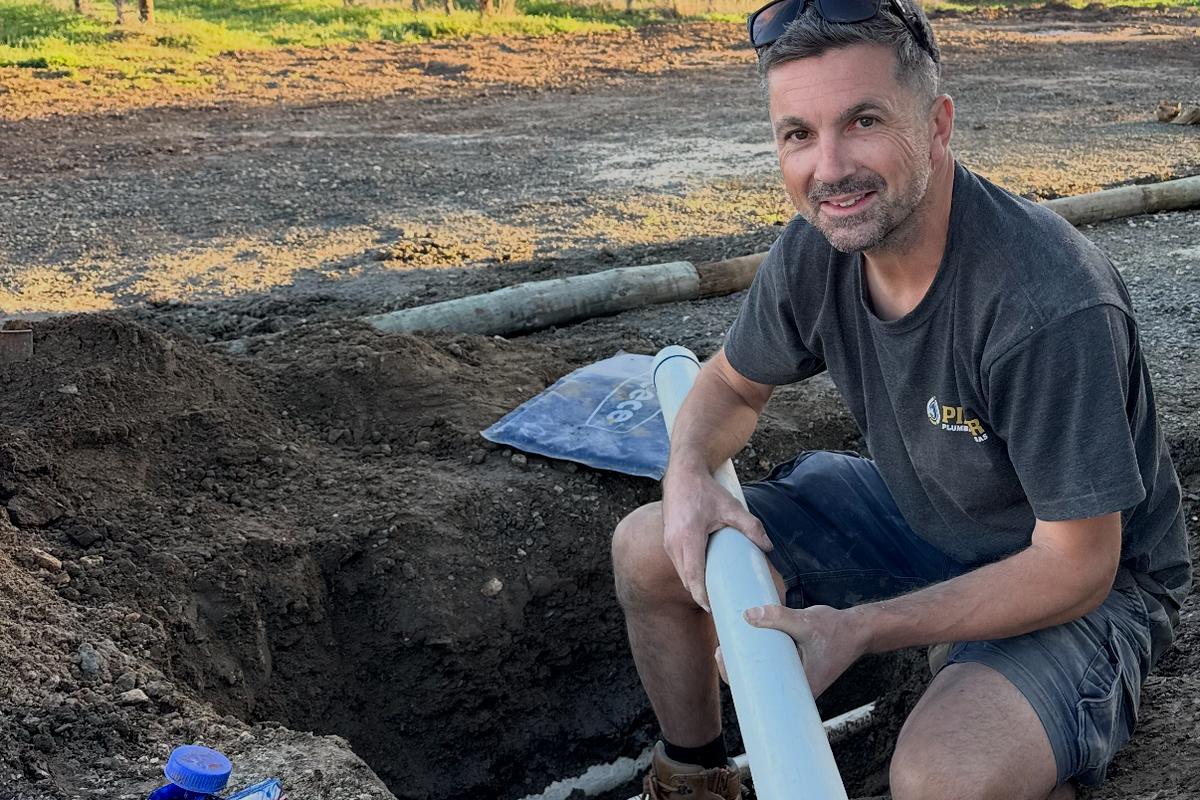
When stormwater ends up pooling against the house, spilling over the gutters or bubbling out of a pit, the usual cause is a blocked stormwater line between the downpipe and where the water is meant to go. Leaves, silt, roots and crushed pipe are the common culprits. The fix is to find the blockage, clear the line, and check it with a camera. If the pipe is broken or never had enough fall, that section needs relaying.
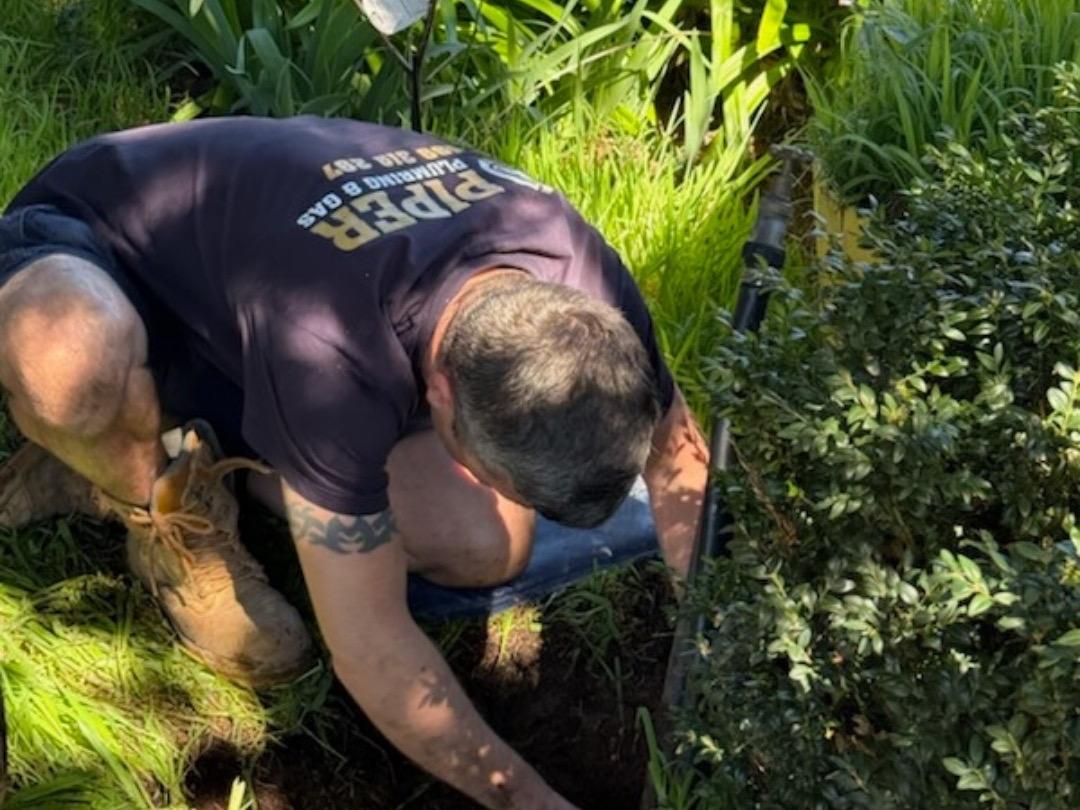
Where stormwater is meant to go
Every downpipe should run into a stormwater line that carries the water away from the house. In town that usually means out to the street kerb or a council drain. On rural blocks it might go to a rainwater tank, a soakage area or a dam. It should never run into the sewer, your septic tank or onto the neighbour’s place.
The septic point catches people out. The Barossa Council lists stormwater from downpipes and rainwater tank overflows as prohibited discharges for septic systems. A septic tank or CWMS connection can’t take the volume from a roof in a storm, so a downpipe tied into it can flood the system. If you’re not sure where yours go, that’s worth finding out.
Signs your stormwater isn’t draining
- Gutters overflowing even though they’re clean, which usually means the downpipe or the line below it is blocked.
- A downpipe that fills up or bulges at the joints during heavy rain.
- Water pooling against the walls or sitting on paths and paving long after the rain stops.
- A stormwater pit that overflows instead of draining.
- Damp walls, a musty smell or cracking along the side of the house where water keeps collecting.
- Soggy, sunken or unusually green strips in the lawn, which can mark a broken pipe underneath.
Common causes
- Leaves and silt. Gutter guards and leaf diverters help, but over the years debris washes down and settles in the line, especially at bends.
- Tree roots. Roots find their way into stormwater pipes the same way they get into sewers. Our post on blocked drains and tree roots covers how that happens.
- Crushed or broken pipe. Driveways, vehicles, building work and ground movement can crack or flatten older pipes.
- Not enough fall. A line laid too flat lets water and silt sit in it. Some older lines also sag in the middle over time.
- Undersized or missing pipework. An extension or a new shed adds roof area, and the old line can’t keep up.
- Blocked or buried pits. A pit that has been paved over, filled with silt or never had a grate cleaned can’t do its job.
What you can check yourself
- Clean the gutters and the top of each downpipe, then run a hose into the gutter and watch where the water goes.
- Lift the grates on any stormwater pits and scoop out leaves and silt.
- Walk the line from the house to the street or the outlet and look for wet patches, sinking ground or a broken kerb outlet.
- On a tank, check the overflow is free to run where it is meant to.
If the water still backs up after that, the blockage is further down the line.
How we clear and fix it
- Find it. Craig works out which line is blocked and roughly where.
- Clear it. The hydro jetter flushes the stormwater line and clears out the pits.
- Look at it. If it keeps blocking, the drain camera shows whether the pipe is cracked, crushed or full of roots. Our guide to CCTV drain inspections explains what the camera shows.
- Repair it. Broken or sagging sections are dug up and replaced so the water runs away properly.
You’ll be told what caused it and what any repair would cost before it goes ahead. More on our blocked drains page.
Stormwater coming up or flooding in heavy rain? Ring Craig on 0499 319 297.
Keeping it flowing
A bit of upkeep stops most stormwater problems before the first big storm of the season:
- Clean gutters before winter and again before summer storms, more often under gum trees.
- Keep pit grates clear and lift them once a year to scoop out the silt.
- Don’t pave, deck or garden over pits and inspection points. If you can’t get to them, nobody can clear them.
- Plan for new roof area. A new shed, carport or verandah adds water that has to go somewhere. Get the downpipes connected into a line that can take it, not left to spill onto the ground.
- Watch the low side of the house after heavy rain. Water that sits against the footings is worth sorting out early.
What to tell us when you ring
A few details help Craig turn up with the right gear: which downpipe or pit is playing up, whether it happens every time it rains or only in a downpour, where the line is meant to run to (street, tank, soakage or dam), and whether there has been any building work, digging or tree removal near it. Photos of the overflowing pit or the pooling water, taken while it’s raining, are gold.
Barossa and Gawler blocks
Older homes in towns like Tanunda, Angaston and Nuriootpa can have old stormwater lines that have been extended over the years as verandahs, sheds and extensions went up. On rural blocks, long runs out to a tank or soakage area are easy to forget about until a big storm finds the weak spot. Newer estates around Gawler have simpler systems, but building work and landscaping can still crush a line or bury a pit.
If you’re putting in a new tank, our post on plumbing a rainwater tank into your house covers the overflow and backflow side.
We’re based in Williamstown and work right across the Barossa Valley, Gawler and surrounds, including Tanunda, Angaston and Gawler. Ring Craig on 0499 319 297, call Hayley in the office on (08) 8472 9507, or send us the details.
Sources
- The Barossa Council: Septic system maintenance tips (prohibited discharges)
- The Barossa Council: CWMS connections
Rules and schemes change. These sources were checked on 19 October 2026. Licence: LIC PGE341299.
More from the blog
- How often should a septic tank be pumped out in the Barossa?
- Heat pump, gas or solar hot water: which suits a Barossa home?
- Plumbing a rainwater tank into your house in SA
- Blocked drains and tree roots: signs, causes and fixes
- Gas leak or burst pipe: what to do before the plumber arrives
- CCTV drain inspections: what the camera shows and when you need one