For most Barossa homes, a heat pump is the cheapest to run, especially with solar panels on the roof. Gas continuous flow suits a busy household that already has natural gas or LPG. Solar hot water works well but costs the most up front and needs a booster in winter. Whichever you pick, a replacement in South Australia usually has to be a low emission system, and it has to be installed by a licensed plumber.
The SA rules come first
When you replace a water heater in an established home, South Australia’s water heater requirements apply. For most homes that means a low emission water heater: high efficiency gas, solar or an electric heat pump. The SA Government has an online tool that tells you which types are allowed for your house, and there are some situations where the rules don’t apply.
Only licensed plumbers can install water heaters, and your plumber must give you an electronic Certificate of Compliance. Craig is a licensed plumber and gas fitter (LIC PGE341299), so on a gas unit the water, the gas and the paperwork are all done by him.
The four options side by side
| System | To buy and install | To run | Worth knowing |
|---|---|---|---|
| Heat pump | Higher | Low | Uses about 30% of the energy of a standard electric unit. The compressor hums like an air conditioner. |
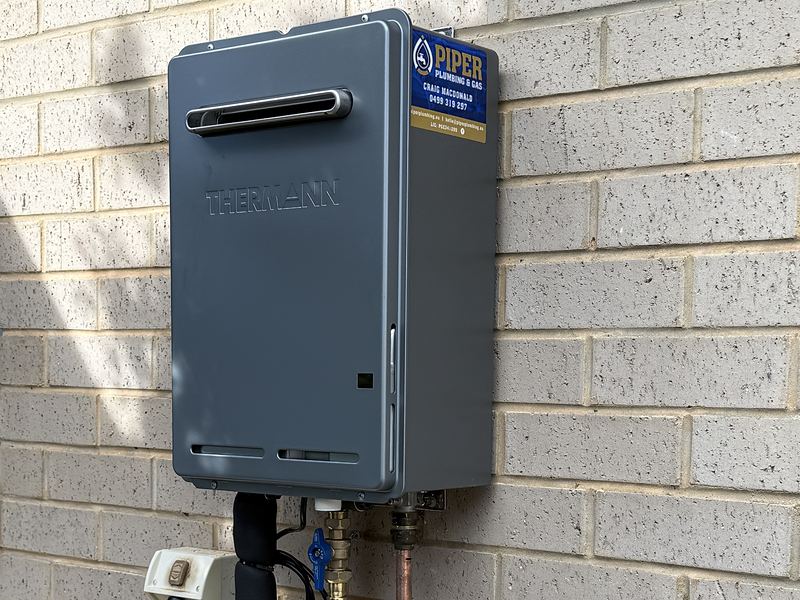
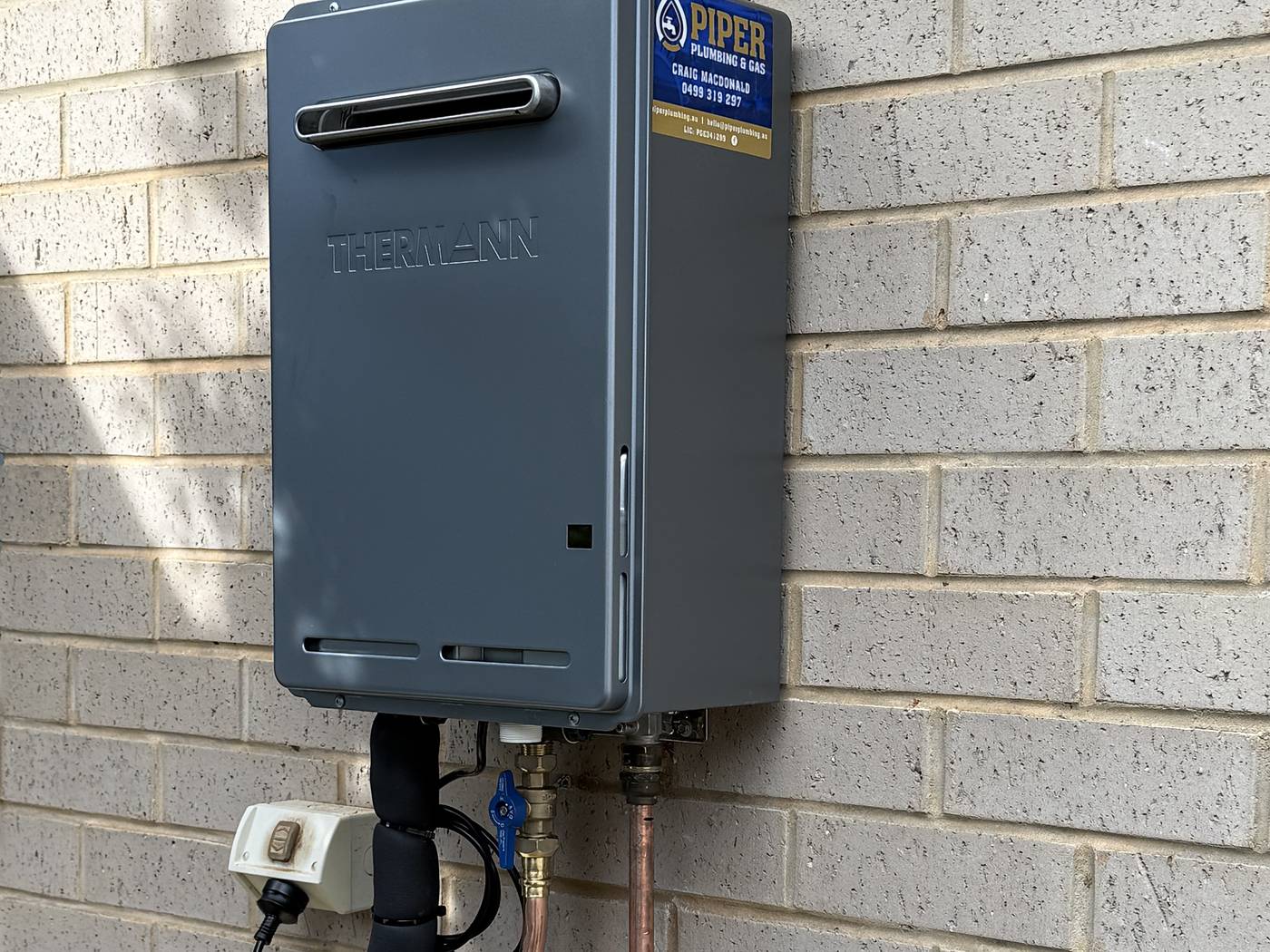
| Gas continuous flow | Medium to high | Medium to high | Heats as you use it, so you don’t run out. Hangs on an outside wall. |
| Solar (roof or ground) | Highest | Low | Needs a gas or electric booster for winter and long cold nights. |
| Electric storage | Lowest | Higher, unless run from solar PV | Often limited as a replacement by the SA rules above. |
Cost and running comparisons are the general guide published on energy.gov.au, not our prices.
Heat pump hot water
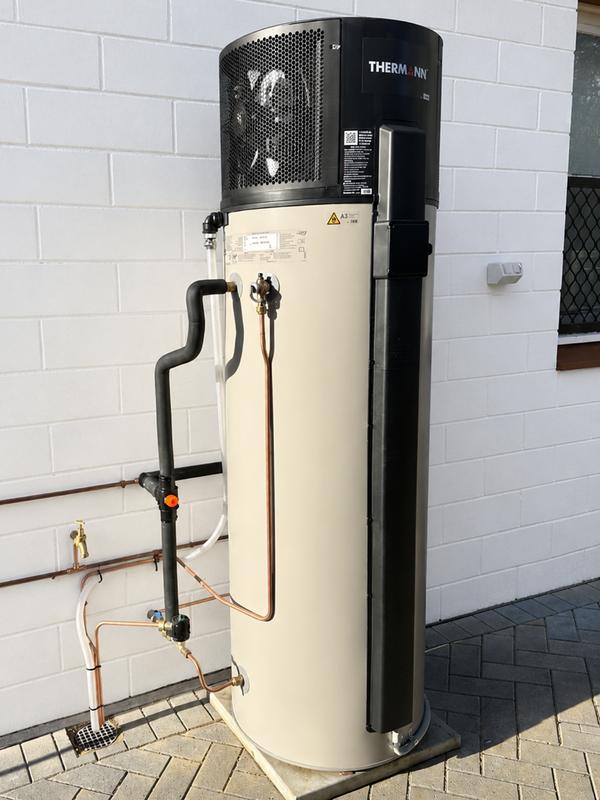
A heat pump works like a fridge in reverse: it pulls heat out of the air and puts it into the tank. energy.gov.au says it uses about 30% of the energy of a conventional electric system, which is why it is usually the cheapest to run. Run it in the middle of the day off your own solar panels and the running cost drops again.
Two things to check for a Barossa house:
- Cold mornings. Not every model is designed for places that regularly drop below 5°C in winter. If your property gets frosty, ask for a model rated for cold climates.
- Noise. The compressor sounds like an air conditioner’s outdoor unit, so think about where it sits relative to bedrooms and the neighbours.
There are integrated models (tank and compressor together) and split models (compressor separate), which helps on tight sites.
Gas hot water: continuous flow or storage
Continuous flow (also called instantaneous) is the most common gas water heater. It heats water only as you use it, so a house full of teenagers won’t empty it. Gas storage tanks are simple swaps, but energy.gov.au notes they lose a lot of heat, especially in cold climates.
Plenty of rural Barossa homes run on bottled LPG rather than natural gas. Both work. LPG running costs depend on your bottle deliveries, so factor that in. Craig fits and services gas storage and continuous-flow units on natural gas and LPG.
Solar hot water
Solar panels or evacuated tubes heat the water, with the tank either on the roof or on the ground. It is cheap to run in summer, but in winter it leans on a gas or electric booster. Buying and installing it costs more than the other options, so rebates matter more here.
Rebates and discounts
- Small-scale technology certificates (STCs). Eligible solar and heat pump water heaters create STCs under the federal scheme. They are normally taken off the price up front by the installer or supplier.
- REPS. South Australia’s Retailer Energy Productivity Scheme runs from 2026 to 2030 and includes a “replace or upgrade water heater” activity. Energy retailers offer discounts through approved providers. You don’t have to be their customer, and offers differ between retailers.
Discount amounts change, so check what is on offer when you’re ready to buy, and get it in writing. Be careful with door-to-door offers: the SA Government says REPS providers at your door must show photo ID and company details.
What changes the price of a new system
- The type and size of the unit.
- Whether it goes in the same spot or somewhere new.
- New gas pipework, or a new power circuit for a heat pump (an electrician does the electrical side).
- Access, and removing the old unit.
Craig will talk through the options for your house and price them. You’ll know the price before any work starts.
Repair or replace?
A dripping relief valve, a dead element or a pilot that won’t stay lit is usually a single part. A leaking tank, a unit that keeps breaking down or rusty water from an old cylinder means it’s time for a new one. Our hot water page has the full list.
We’re based in Williamstown and work right across the Barossa Valley, Gawler and surrounds, including Nuriootpa, Gawler and Tanunda. Ring Craig on 0499 319 297, call Hayley in the office on (08) 8472 9507, or send us the details.
Sources
- SA.GOV.AU: Water heater requirements
- energy.gov.au: Hot water systems
- Department for Energy and Mining: Retailer Energy Productivity Scheme (REPS)
- Department for Energy and Mining: REPS activity specifications (WH1 Replace or Upgrade Water Heater)
- SA.GOV.AU: Energy discounts and offers from retailers
Rules and schemes change. These sources were checked on 5 October 2026. Licence: LIC PGE341299.