
Heat pump hot water
Installs across the Barossa Valley & Gawler
A heat pump can cut what you spend heating water by a long way. In the Barossa it has to be the right model in the right spot. Craig installs heat pumps, and he’ll tell you straight when gas, solar or electric would suit your house better.
Weighing up a new system? Ring 0499 319 297.
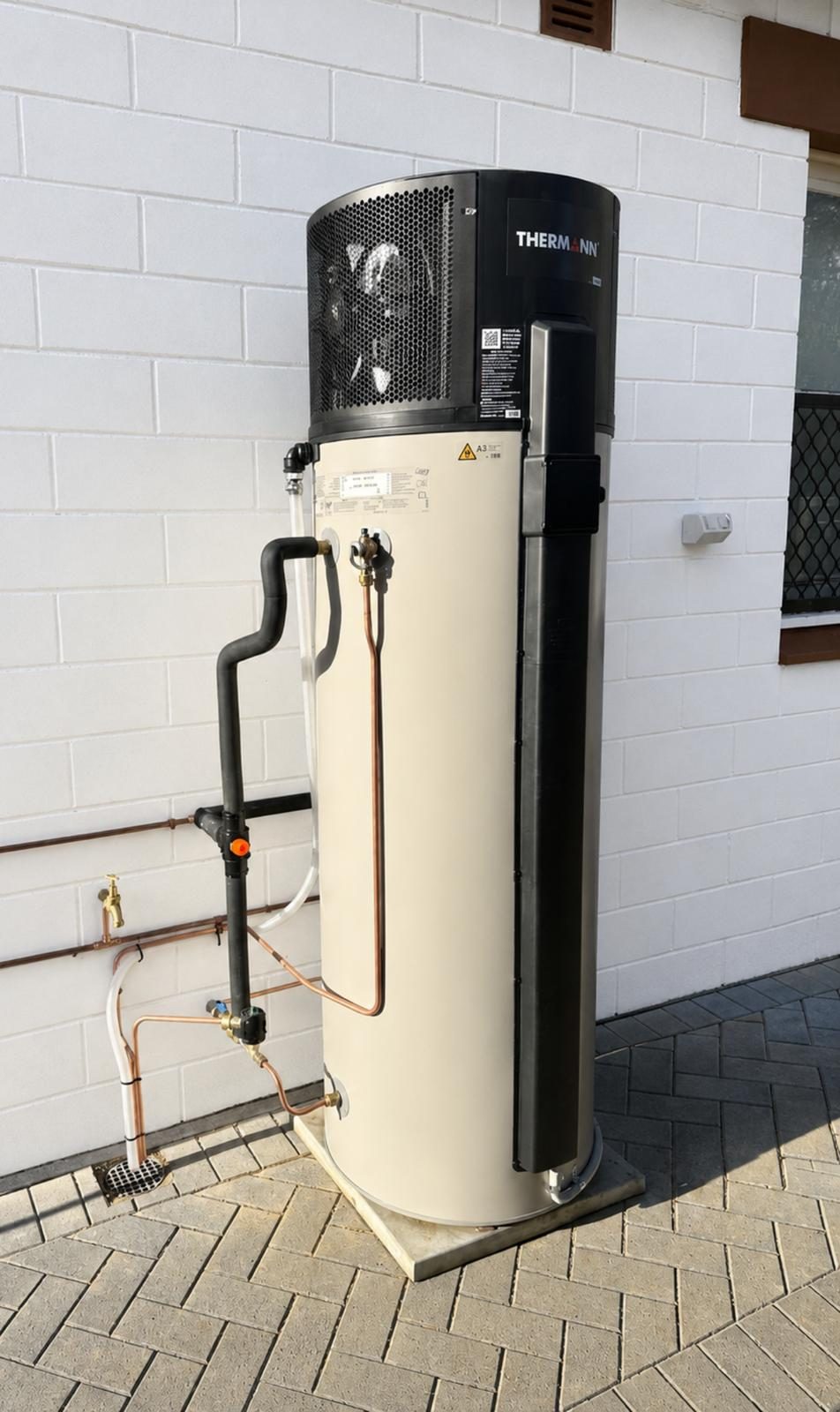
How a heat pump heats water
It works like a fridge in reverse. Instead of pushing heat out of a box, it pulls heat out of the air and puts it into the tank.
- Step 1
Air in
A fan draws outside air across a coil filled with refrigerant.
- Step 2
Heat picked up
The refrigerant boils at a very low temperature, so it soaks up warmth even from cool air.
- Step 3
Compressed
A compressor squeezes the refrigerant, which pushes its temperature right up.
- Step 4
Into the tank
That heat passes into the water. The cooled air blows out the side of the unit.
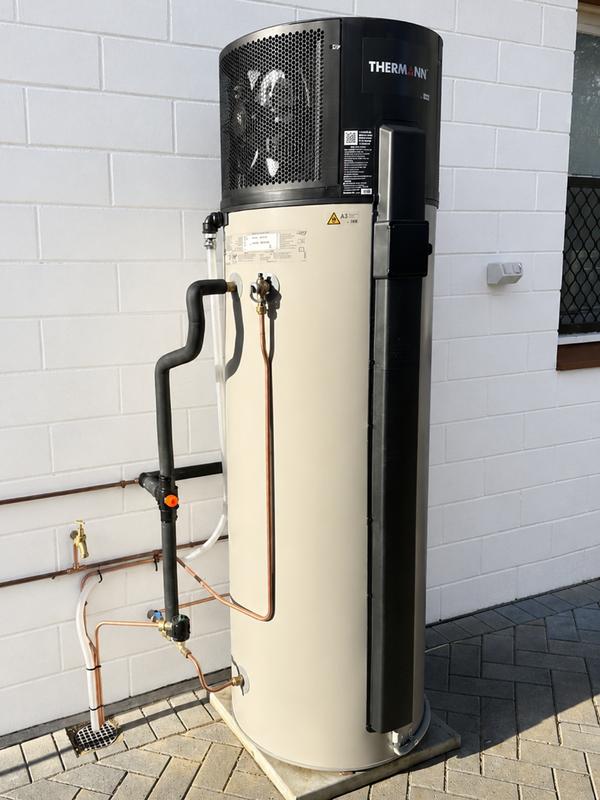
energy.gov.au puts a heat pump at roughly 30% of the energy of a standard electric tank. Most are a single unit with the compressor on top of the tank; split models put the compressor separately, which helps on a tight site.
Heat pumps and cold Barossa nights
The Bureau of Meteorology’s Nuriootpa station averages an overnight low of about 4.6°C in July and has recorded frosts below minus 5. The colder the air, the less heat there is to collect, so a heat pump takes longer and works harder in winter. Some models also stop and defrost their coil, and many fall back on a built-in electric element when it’s very cold.
Pick a cold-climate model
Not every heat pump is designed for places that regularly drop below 5°C. Ask for one rated for cold climates.
Run it in the day
A timer that runs it from late morning to mid-afternoon catches the warmest air, and your solar if you have it.
Mind the spot
Somewhere sunny and sheltered with room for air to move. Not the frostiest low corner of the block, and not under a bedroom window.
The honest pros and cons
Where it shines
Good reasons to choose one- Low running cost. Usually the cheapest system to run.
- Pairs with rooftop solar when set to heat during the day.
- No gas needed, so no bottle deliveries for hot water.
- Meets SA’s rules for replacing a water heater in most homes.
Where it’s harder work
Worth knowing first- Costs more up front than a like-for-like gas or electric swap.
- Slower to reheat on cold nights, so tank size matters.
- Makes some noise while it runs, like an air conditioner.
- Needs space and airflow, which an old laundry may not have.
When gas, solar or electric suits better
A heat pump isn’t right for every house. These are the times Craig might point you elsewhere.
| System | Often the better pick when |
|---|---|
| Gas continuous flow | The house is already on natural gas, the household is big, and nobody wants to run out mid-shower on a frosty morning. |
| Solar | There’s a big north-facing roof, the house uses a lot of hot water in summer, and you’re happy to pay more up front. It still needs a gas or electric booster for winter. |
| Gas storage | The old gas tank has failed and a quick like-for-like swap is the priority, where the rules allow it. |
| Smart electric | The house has plenty of rooftop solar, space is tight, and the SA rules allow it for your home. |
More detail in heat pump, gas or solar hot water: which suits a Barossa home?
Rebates, rules and what Craig needs to quote
Government schemes can take money off eligible heat pump systems. What’s on offer changes, and it depends on the system and your home, so ask us whether a rebate applies when you get a quote. Get any discount in writing before you agree to the work.
South Australia also has rules about which water heaters can go into an established home, and the system has to be installed by a licensed plumber who gives you a Certificate of Compliance. Craig checks the rules for your house before he quotes.
To price a heat pump, send Craig:
- A photo of your current unit and its label (make and model).
- A photo of where it sits, with a bit of the surroundings.
- How many people live there, and if there are solar panels on the roof.
- Your town, so he can plan the visit.
Email it all to hello@piperplumbing.au or use the quote form.
Heat pump questions
Do heat pumps work in a Barossa winter?
Yes, but they work harder. A heat pump pulls warmth out of the air, so on a frosty night it has less to work with and takes longer to heat the tank. A model built for cold climates, set to run in the warmer middle of the day, copes well.
Are heat pump hot water systems noisy?
They make about the sound of an air conditioner’s outdoor unit while they run. That’s why Craig looks at where it sits relative to bedrooms and the neighbours, and why running it during the day helps.
Can a heat pump run off my solar panels?
Yes. Set on a timer to run in the middle of the day, it can use your own solar power. Any new power circuit or timer wiring is done by a licensed electrician.
Is there a rebate for a heat pump in South Australia?
There can be. Government schemes can reduce the price of eligible heat pump systems, but what’s on offer changes and depends on the system and your home. Ask us whether a rebate applies when you get a quote.
Can you replace my gas hot water with a heat pump?
Yes. Craig is a licensed plumber and gas fitter (LIC PGE341299), so he can install the heat pump and make the old gas supply safe in the same job.
Do you install heat pumps in Gawler as well as the Barossa?
Yes. Craig installs heat pump hot water across the Barossa Valley, Gawler and the surrounding towns.
Hot water by town
Hot water nearby
Local detail for each town- Barossa-wide Every town we cover, with drive times.
- Nuriootpa Sizing for colder winters.
- Tanunda Placement in older homes.
- Angaston Farms with solar on the shed.
- Gawler Swapping electric for a heat pump.
Related pages
Read next- Hot water repairs and installs Every system type, repair or replace.
- Gas fitting Gas hot water, LPG and gas lines.
- Heat pump, gas or solar? Running costs and SA rules compared.

Thinking about a heat pump?
Ring Craig on 0499 319 297, or email photos of your current system to hello@piperplumbing.au and he’ll talk you through the options.