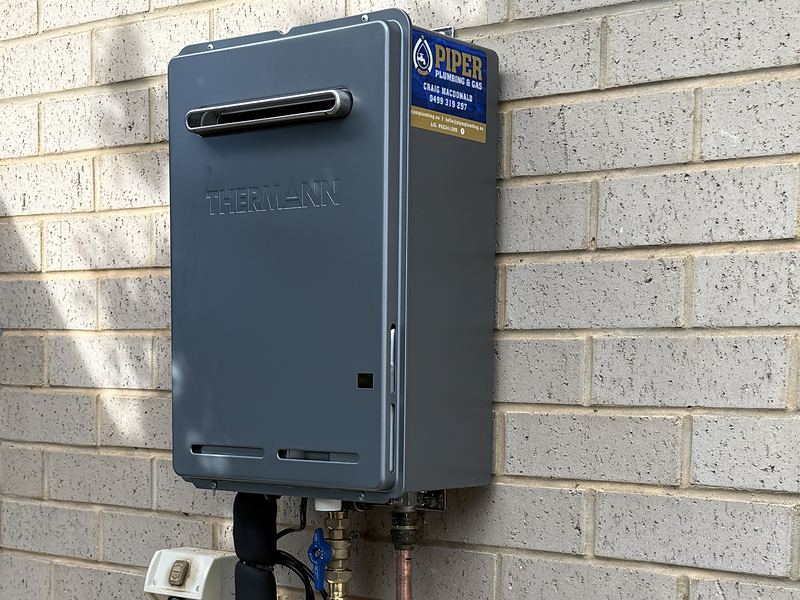
It’s time to replace a hot water system when the tank itself is leaking, the hot water comes out rusty, or an older unit keeps breaking down. In South Australia the new one usually has to be a low emission type: 5-star gas, solar or a heat pump. The exception that matters in the Barossa: a house not connected to a piped gas network, including homes on LPG bottles, can also have an electric water heater of up to 250 litres.
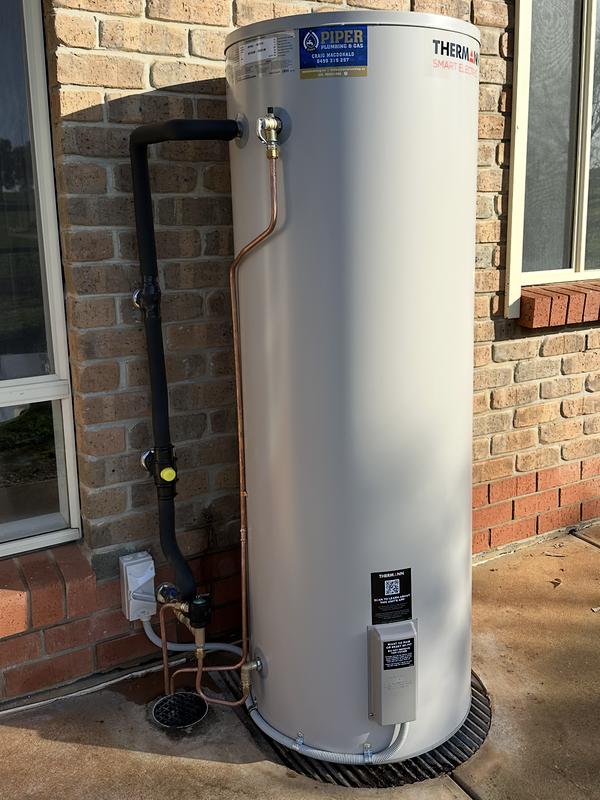
Signs it’s time for a new system
- The tank is leaking from the base or the body of the cylinder. Once a cylinder has rusted through, it can’t be patched.
- Rusty or discoloured hot water from an older storage tank often means the inside of the cylinder is going.
- The same unit keeps breaking down. After a few repairs on an old system, that money is usually better spent on a new one.
- You run out every day. The household has outgrown the system, and a bigger tank or a different type will suit it better.
Before you decide it’s finished, run through our no hot water checklist. A tripped switch, an empty LPG bottle or a pilot light that has gone out is not a reason to replace anything.
How long does a hot water system last?
There’s no set age. The warranty is a fair guide to what the maker expects: the Australian Government’s Your Home guide says tank warranties are typically 5 to 10 years for glass-lined steel and 10 to 15 years for stainless steel.
Glass-lined tanks have a sacrificial anode, a metal rod inside the tank that corrodes so the tank doesn’t, and the same guide says it needs replacing every few years. The water matters too: stainless tanks aren’t suited to hard water areas, and glass-lined tanks there may need a different type of anode. When you ask about a new tank, tell Craig whether the house runs on mains, rainwater or bore water.
Repair or replace?
Plenty of hot water faults come down to one part, and those are usually worth fixing:
- The relief valve. A small drip while the tank heats is normal. A good rule of thumb: if a bucket under the valve fills in a day, the valve needs replacing.
- A thermostat or element on an electric unit.
- A pilot or ignition fault on a gas unit.
- Water too hot or too cold at the taps, which is often the tempering valve.
On solar and heat pump systems, a big part failing doesn’t automatically mean starting again. Under SA’s water heater rules, replacing a single major component, such as a heat pump’s compressor unit, a solar collector or the storage tank, is treated as a repair rather than a new installation. Whether it’s worth doing depends on the age of the system, its condition and whether parts are still available. Our hot water page has the full repair-or-replace list, and the solar hot water page covers solar systems.
What SA’s rules allow when you replace
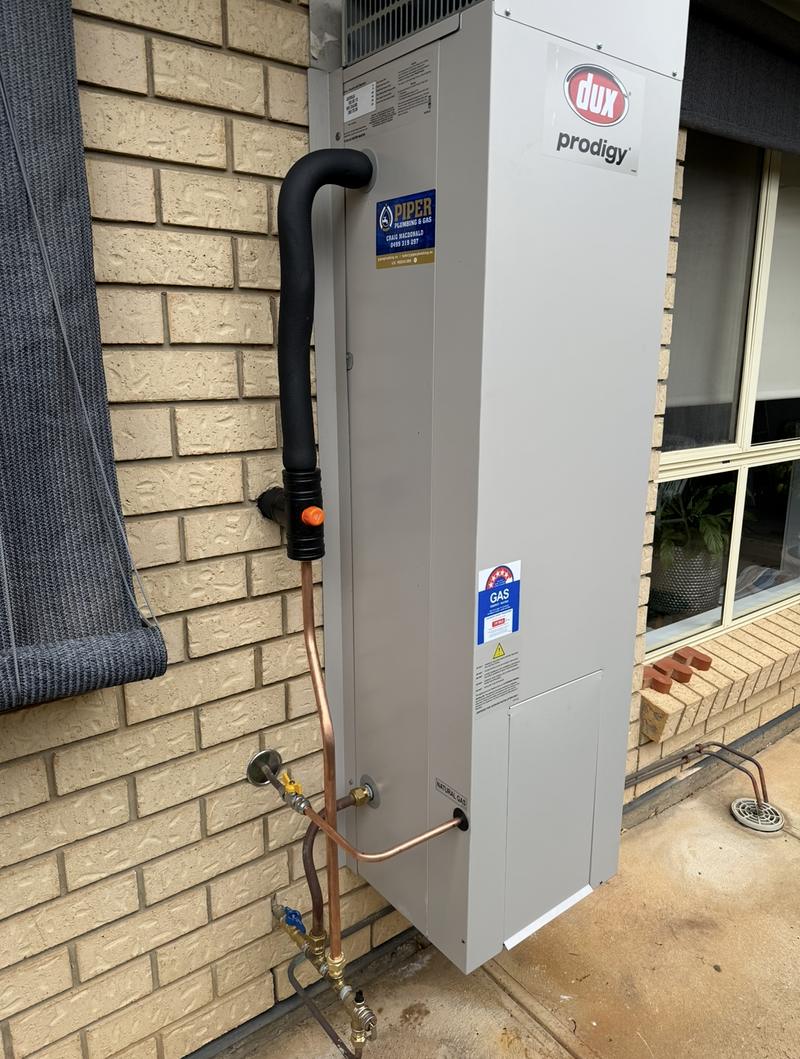
South Australia has its own rules for water heaters in houses, set out in the SA section of the Plumbing Code of Australia. What you can put in depends mostly on one question: is the house connected to a piped (reticulated) gas network that can supply its appliances? Gas bottles don’t count as a piped connection, and neither does a gas main in the street that the house isn’t hooked up to.
| Your house | What can go in |
|---|---|
| Connected to a piped gas network (natural gas, or piped LPG) | A gas water heater with an energy rating of 5 stars or more, a gas or electric boosted solar system, or a heat pump. Solar and heat pump models have to be eligible for a minimum number of STCs. |
| Not connected to piped gas (LPG bottles, or no gas at all) | Any of the above, or an electric water heater of up to 250 litres, or a small electric instantaneous unit (1 litre of storage or less, 15 kW or less). |
A like-for-like replacement made under a manufacturer, supplier or installer warranty isn’t caught by these rules, and neither is a gas water heater with an energy rating of 3 stars or more installed entirely within a fully enclosed roof space, room or attached garage. A temporary electric water heater of up to 55 litres is also allowed for up to 60 days, pending installation of a complying one.
Only a licensed plumber can install a water heater, and you should get a Certificate of Compliance for the work. Craig is a licensed plumber and gas fitter (LIC PGE341299), so on a gas system we handle the water, the gas and the compliance paperwork ourselves, with no second trade needed. We check which rules apply to your house before we quote.
Tank leaking right now? Ring Craig on 0499 319 297.
Getting the size right
A replacement is a good time to check the old system was the right size in the first place. Some pointers from the same Your Home guide:
- About 50 litres of hot water per person per day is typical, but it depends on the household.
- A tank that’s too small runs out, or has to reheat at times that cost more. A bigger tank serves more people but uses more energy keeping the water hot.
- Gas continuous flow: standard units deliver to one or two places at once, and high-performance units to three or more.
- On LPG, a gas system generally needs two or more 45 kg bottles so you’re not swapping them all the time.
Tell Craig how many people live there, how many bathrooms you have, and whether two showers often run at once. Heat pumps reheat more slowly on cold Barossa nights, so tank size matters more with those. Our heat pump hot water page explains why.
What affects the cost of a replacement
We quote each job rather than publish set prices. The price comes down to the system, its size, where it goes and what pipework or wiring has to change. These are what change the number:
- The type of system. energy.gov.au puts electric storage as the cheapest to buy and install, gas as medium to high, and heat pumps and solar as the most expensive up front but cheap to run.
- The size of the tank or unit.
- Same spot or a new spot. Moving the system means new pipe runs, and it’s best kept close to the kitchen and bathrooms where you can.
- Gas work. An existing gas pipe sized for a stove or heater may need replacing with a larger one for a gas water heater. On LPG, the bottle setup may need changing.
- Power. A heat pump may need a new circuit or timer, and that part is done by a licensed electrician.
- The tempering valve. New hot water systems need a tempering valve, or another way of keeping the water at bathroom and other personal hygiene outlets to 50°C or less, so nobody gets scalded.
- Access to the old unit and taking it away.
- After hours. An emergency swap outside normal hours can cost more than a planned one.
- Rebates. Eligible solar and heat pump systems create STCs, which are normally taken off the price up front, and SA’s REPS scheme has discounts through energy retailers. Our post on heat pump, gas or solar hot water explains both. Offers change, so get any discount in writing.
We’ll talk through the options that suit your house and price them. You’ll know the price before any work starts.
Planned replacement or emergency swap?
If the old system is still going, you have time to weigh up gas, electric, heat pump and solar, check what rebates apply and get the size right. If it has failed, the priority is getting hot water back. energy.gov.au notes that some installers will lend a temporary electric water heater while you choose, and SA’s rules allow a small temporary unit for up to 60 days. Ask us what’s possible for your house. No hot water at all? That’s what our 24/7 emergency line is for.
What to send Craig for a quote
- A photo of your current unit and the label with the make and model.
- A photo of where it sits, with a bit of the surroundings.
- Whether you’re on natural gas, LPG bottles or no gas, and whether there are solar panels on the roof.
- How many people live there, and your town.
Email it to hello@piperplumbing.au or use the quote form.
We’re based in Williamstown and replace hot water systems right across the Barossa Valley, Gawler and surrounds. See hot water across the Barossa, or our pages for Gawler, Nuriootpa, Tanunda and Angaston. Ring Craig on 0499 319 297, call Hayley in the office on (08) 8472 9507, or send us the details.
Sources
- ABCB: NCC 2022 Volume Three (Plumbing Code of Australia), South Australia, SA B2D2 Water heater in a heated water supply system
- SA.GOV.AU: Water heater requirements
- Your Home (Australian Government): Hot water systems
- energy.gov.au: Hot water systems
- Department for Energy and Mining: Retailer Energy Productivity Scheme (REPS)
Rules and schemes change. These sources were last checked on 5 November 2026. Licence: LIC PGE341299.
More from the blog
- Heat pump, gas or solar hot water: which suits a Barossa home?
- No hot water? What to check first, and when to call a plumber
- Low water pressure in the house: causes and fixes for Gawler and Barossa homes
- Gas bayonet points for BBQs and heaters: what to know before you book
- Gas leak or burst pipe: what to do before the plumber arrives
- Plumbing a rainwater tank into your house in SA
- Bathroom renovations in the Barossa: how the plumbing side works